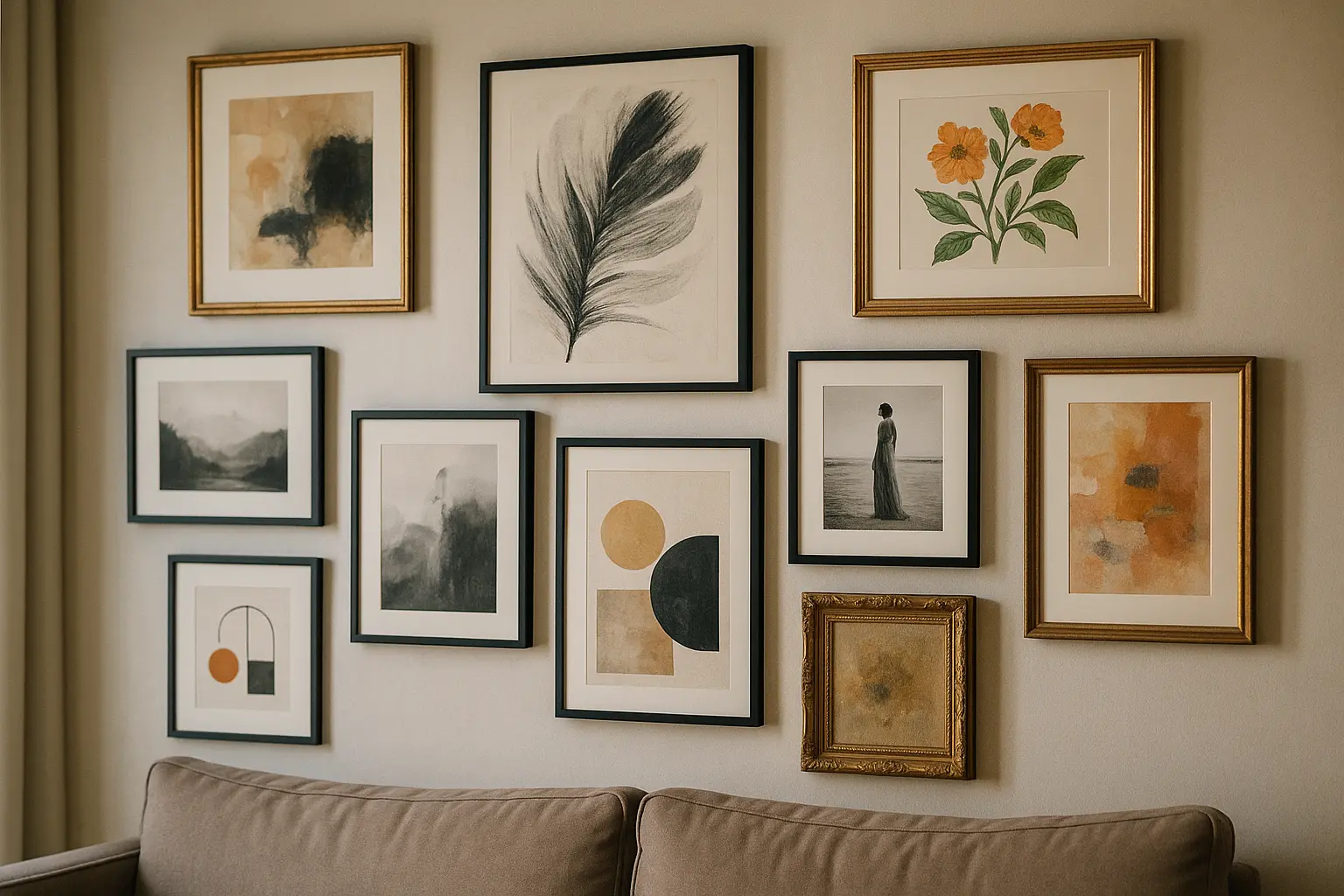
Creating a Gallery Wall: Tips and Tricks for a Stunning Display
Creating a gallery wall is like curating our own mini art exhibition right within the confines of our home. It’s an exciting venture that transforms any room into a sophisticated space, reflecting our personality and style. As we embark on this artistic journey, let’s explore the art of arranging pieces, frames, and photos to create a mesmerizing display that not only catches the eye but also tugs at the heartstrings.
The Artistic Appeal of a Gallery Wall
When we think of a gallery wall, our minds often wander to grand halls filled with majestic artwork. But who says we can’t bring a slice of that grandeur home? A well-designed gallery wall is more than just a collection of pieces; it’s a visual narrative that speaks to our aesthetic sensibilities. Whether we lean toward contemporary design or prefer a vintage flair, there’s always room to innovate and express ourselves.
A gallery wall isn’t just for art aficionados. It’s for anyone who cherishes visual storytelling. What makes this concept so appealing is its versatility: we can mix and match frames, mix colors, and layer different artworks to craft a unique style. It’s like a living, breathing canvas that changes with our tastes and moods. By carefully selecting each piece, we create a display that resonates with our visitors and ourselves.
Moreover, these walls can celebrate cherished memories. By incorporating personal photos alongside professional art, we build a timeline of our most treasured moments. Our gallery wall then becomes not just an art display but a heartfelt journey through time. The key here is to strike a balance. While it’s tempting to showcase every beloved piece, we must curate thoughtfully to avoid overwhelming the space.
A gallery wall isn’t just about aesthetics; it’s about creating a connection. When guests enter the room, we want them to feel an emotional pull, a sense of curiosity, and a little touch of envy at how a few frames can transform a room into a canvas of memories and stories.
Choosing Your Theme and Pieces
Designing a gallery wall might seem daunting at first. But like any great masterpiece, it starts with a vision. The first step is to decide on a theme. Do we want a darker, more dramatic style, or do we lean towards bright, airy simplicity? Choosing a style provides a cohesive framework for selecting art and frames. Whether we opt for monochromatic tones or a vibrant mix of colors, a unified theme will ensure harmony among our chosen pieces.
Once we have a theme, the next step is selection. This is where the real fun begins! We can explore local galleries, online marketplaces, or even our favorite photos from past adventures. Remember, not every piece needs to be a star. Sometimes, a minimalist artwork or a simple frame can serve as a vital supporting player, enhancing more complex pieces.
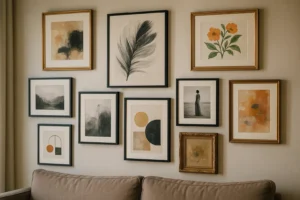
A mix of textures and sizes adds depth to a gallery wall. Consider incorporating frames of different shapes and materials. Wooden frames might add warmth, while metallic ones bring a modern edge. The key is variety without losing cohesion. One trick is to include at least one or two standout pieces that draw the eye, anchoring the entire display.
Remember, our gallery wall is an extension of our space. It’s essential to consider the room’s existing design elements. If our walls are painted in a bold color, perhaps neutral frames can help balance the display. Conversely, in a room with neutral tones, colorful artwork can infuse life and vibrancy. In this artistic dialogue between art and space, every choice matters.
Arranging with Precision
Once we’ve selected our pieces, the next step is to arrange them with a keen eye for detail. The arrangement can make or break a gallery wall. It’s where the art of placement comes into play. Remember, our goal is to create a flowing design that captivates and engages anyone who gazes upon it.
Before we start hanging, it’s beneficial to lay out the pieces on the floor. This gives us a sense of how they interact with one another. Consider starting with a central piece and building around it, alternating between sizes and colors to maintain a dynamic yet balanced display. The central anchor method provides a focal point while allowing the eye to wander across the wall.
Level and alignment are crucial in maintaining a polished look. Using a spirit level or laser level can ensure perfect alignment. Gaps between frames should be consistent, ideally ranging between 2-3 inches. This spacing allows each piece to breathe while contributing to the collective narrative.
Height is another crucial factor. Ideally, the center of the gallery wall should be at eye level, which is approximately 57-60 inches from the floor. This measurement ensures that the art is appreciated comfortably, making it accessible to viewers of various heights.
Lastly, we shouldn’t shy away from experimenting. Artwork arrangements can evolve with time. We may find that certain pieces need a new position or perhaps we wish to add new photos. The beauty of a gallery wall lies in its ability to adapt and grow as our tastes and experiences expand.
Selecting the Right Frames and Materials
Frames are the unsung heroes of any gallery wall. They serve as the window through which our chosen artwork is viewed, enhancing or sometimes altering the perception of the piece. Selecting the right frame is an art form in itself. It requires thoughtful consideration of both the art and the room where it will reside.
Firstly, consistency in frames can achieve a harmonious design. Sticking to a single frame style or color across all pieces can provide a cohesive look. However, if we’re feeling adventurous, mixing different frame styles can create an eclectic yet polished display. The trick lies in maintaining a common element—be it color, material, or finish.
Material choice also plays a significant role in establishing the tone. Wood can lend a classic, timeless feel, while metal and acrylic can add a contemporary touch. For those who love sustainable living, consider reclaimed wood frames or eco-friendly materials. Each choice subtly influences the mood and character of the gallery wall.
Additionally, don’t overlook the potential of alternate display methods. Floating shelves can offer a three-dimensional aspect to our artwork. Clipboards or photo wire displays can provide a casual, modern twist. These elements add depth and uniqueness, inviting viewers to engage more intimately with the pieces.
Ultimately, our frames should not overshadow the art. They are there to complement and elevate each piece, allowing the true beauty of our collection to shine through. Remember, the right frame can turn a simple photo into a masterpiece, making it an integral part of our stunning gallery wall.
A gallery wall is a canvas waiting for our personal touch. It’s not just a display, but a carefully curated journey through art and memory. As we embark on crafting our own gallery wall, we carry the freedom to express, experiment, and evolve.
Every choice, from selecting themes to arranging pieces, reflects our unique vision. It’s an exciting process that bridges the gap between personal taste and public appreciation. Remember, there are no strict rules—only guidelines to enhance the beauty of what we create.
In the end, our gallery wall stands as a testament to our creativity, inviting everyone to share in the story we’ve woven within its frames. It’s a remarkable journey, and we can’t wait to see where it takes us next.
FAQ
What is a gallery wall and why is it popular in interior design?
A gallery wall is a curated arrangement of artwork, photos, and decorative items displayed on a wall. It’s popular because it allows for personal expression, adds visual interest, and can transform a plain wall into a dynamic focal point in any room.
How do I choose the right wall for creating a gallery wall?
Select a wall that has enough space to accommodate your desired layout without overcrowding. It’s often best to choose a wall that naturally draws attention, such as the one behind a sofa, above a console table, or in a hallway.
What are some tips for planning the layout of a gallery wall?
Start by laying out your pieces on the floor to experiment with different arrangements. Use a mix of sizes and orientations for visual balance. Consider using templates or painter’s tape to outline the arrangement on the wall before hanging to ensure everything fits as planned.
How can I ensure that my gallery wall has a cohesive look?
To achieve a cohesive look, stick to a color palette or theme that ties the pieces together. This could be similar frame styles, complementary colors, or a consistent art style. Mixing different textures and materials can also add depth while maintaining harmony.
What are some common mistakes to avoid when creating a gallery wall?
Avoid placing pieces too far apart or too close together; maintaining a consistent spacing helps create a unified look. Another mistake is not considering the height at which artworks are hung—aim for eye level for the central pieces. Lastly, don’t rush the process; take time to curate pieces that truly resonate with your personal style.




Post Comment