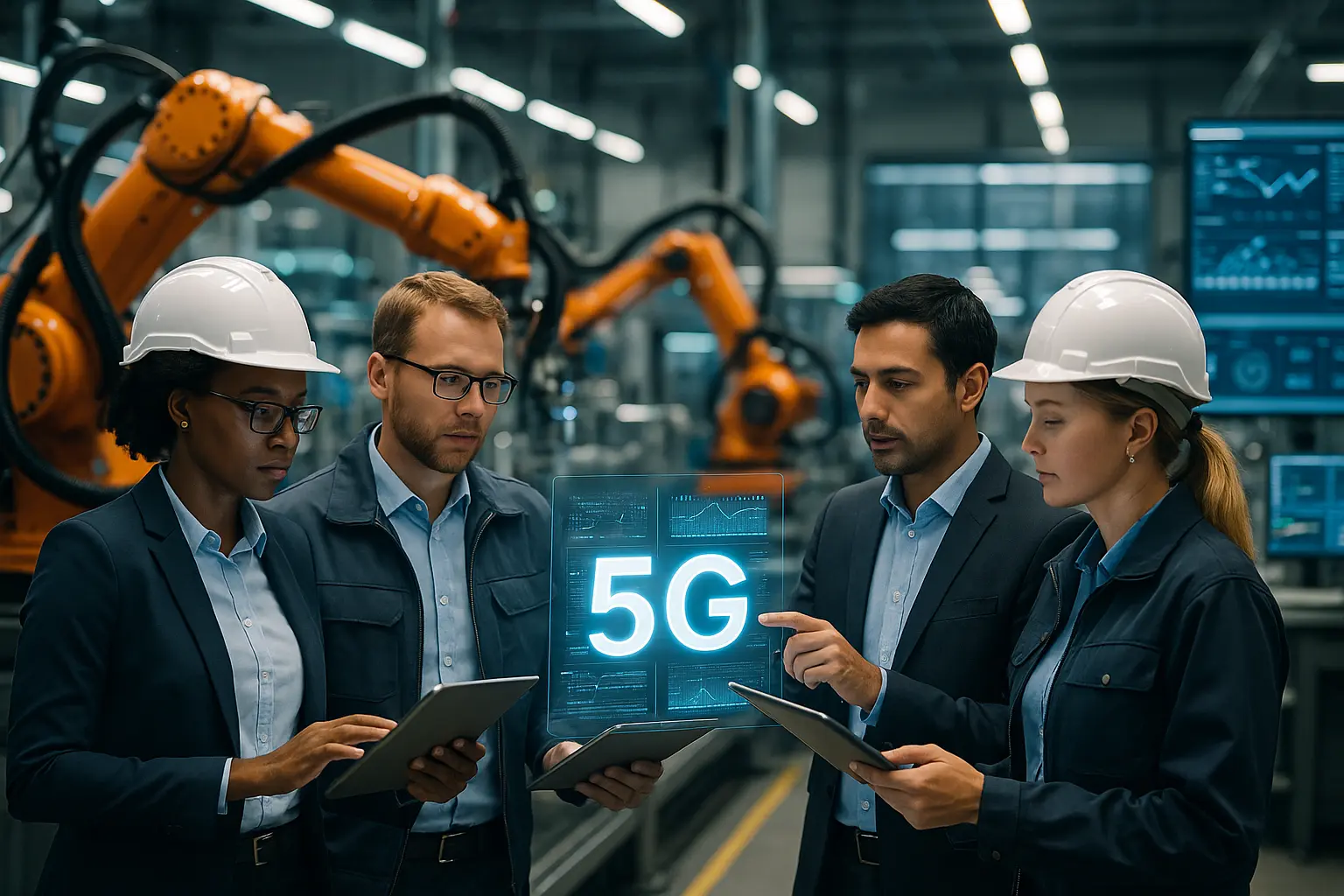
The Impact of 5G Technology on Industrial Operations
In our rapidly evolving industrial landscape, technology is the driving force behind the transformation of operations. The introduction of 5G networks heralds a new era for manufacturing and industrial systems, promising advancements that were once the realm of science fiction. As we stand on the precipice of a new era, it is crucial to understand the profound impact 5G connectivity will have on efficiency, productivity, and the very nature of real-time operations. This article delves into the rippling effects of 5G on industrial operations, exploring its potential to revolutionize our business landscape.
Revolutionizing Connectivity: The Heartbeat of Industry 4.0
The Industrial Internet of Things (IoT) is reshaping the foundations of modern business as we know it. Devices once isolated in function are now seamlessly linked through intricate networks of connectivity. This interconnectedness, fueled by 5G, offers an unprecedented level of automation and efficiency which traditional systems could never achieve.
Imagine a world where every machine, sensor, and component communicates in real-time, analyzing and responding instantaneously to changes. The latency of previous technologies inhibited this possibility. However, the near-zero latency promised by 5G changes the game. It creates a canvas for smart manufacturing, where decisions are made on the fly, optimizing production lines, reducing downtime, and ultimately elevating productivity.
Couple this with cloud-based systems, where vast amounts of data are processed in milliseconds, and the picture becomes clear – 5G is not just an upgrade; it’s a paradigm shift.
Moreover, 5G technology promotes energy efficiency. By optimizing network connections and reducing the need for physical infrastructure, businesses stand to reduce both their carbon footprint and operational costs. Thus, the implications of 5G extend beyond mere connectivity; they promise a sustainable future for industries worldwide.
Real-Time Data Processing: The New Benchmark for Efficiency
In the heart of modern industrial operations lies data – vast, complex, and ever-growing. The evolution of real-time data processing is akin to the invention of the wheel – a turning point that changes everything. Through 5G technology, industries can now process and analyze data faster and more accurately than ever before.
The role of real-time data in manufacturing is transformative. Gone are the days of waiting for hourly reports or manual data entries. 5G connectivity enables machines to communicate instantaneously, offering insights that were previously out of reach. This continuous flow of information allows us to predict failures, optimize operations, and enhance productivity by making informed decisions based on current, rather than historical, data.
Moreover, predictive maintenance becomes a reality. real-time monitoring of equipment health and performance, enabled by IoT devices connected through 5G, allows for timely interventions before minor issues escalate into costly downtimes. This not only extends the life of machinery but also ensures a smoother, more resilient production process.
As we embrace this era of industrial innovation, it is clear that real-time data processing will set the benchmark for efficiency across sectors. Each industry, from manufacturing to logistics, will benefit from the faster, smarter decision-making processes that 5G enables.
Automation and AI: Transforming Industrial Landscapes
The fusion of automation and Artificial Intelligence (AI) within the framework of 5G connectivity is reshaping the industrial landscape. Today, automation isn’t limited to the confines of repetitive tasks; it extends to intelligent decision-making processes that enhance operations.
Imagine systems that predict, learn, and adapt to changing conditions without human intervention. With 5G’s robust network, AI can now process vast amounts of data in real-time, enabling smart factories where machines collaborate seamlessly. This connectivity transforms manufacturing processes, from supply chain management to quality control, all guided by AI’s ever-evolving algorithms.
Furthermore, the real-time integration of AI and automation drives business agility. With 5G networks, companies can now deploy autonomous systems that respond instantly to market trends, optimize resources, and cater to customer demands with precision. In addition, the potential for remote operations becomes limitless. Imagine overseeing industrial processes from any corner of the globe, a capability made possible by the low latency and high reliability of 5G.
As we explore this era of smart technology, it becomes apparent that the synergy between automation, AI, and 5G will redefine how businesses operate, paving the way for a future where efficiency meets innovation.
Challenges and Opportunities: Navigating the 5G Landscape
While the promise of 5G is vast, the journey is not without its challenges. As we transition into this new realm of technology, industries must address network infrastructure requirements, security concerns, and the training needs of a modern workforce.
Building robust 5G networks requires significant investment. The costs of updating infrastructure, testing systems, and ensuring compatibility can be formidable. However, the returns, both in terms of increased productivity and enhanced efficiency, make it a worthwhile endeavor.
Security, too, is a critical consideration. With greater connectivity comes greater vulnerability. Industries must prioritize safeguarding data against cyber threats, ensuring that sensitive information remains protected within an interconnected ecosystem.
On the flip side, the opportunities are boundless. The deployment of 5G opens avenues for innovation and business growth. We can expect a surge in industrial applications, from augmented reality in training to automation in logistics. Business leaders who harness the potential of 5G will find themselves at the forefront of an industrial renaissance, driving efficiency and setting new standards for excellence.
Thus, as we navigate this dynamic landscape, it is essential to balance the challenges with the opportunities, ensuring that the transition to a 5G-enabled world is both seamless and sustainable.
As we stand on the cusp of this technological revolution, it is clear that 5G will redefine the future of industrial operations. Through enhanced connectivity, real-time data processing, and the synergy between automation and AI, 5G promises efficiency, productivity, and innovation at an unprecedented scale.
While the path to full integration is fraught with challenges, the potential rewards are immense. Embracing 5G is not merely about upgrading our technology; it’s about embracing a future where businesses operate smarter, faster, and more sustainably.
In this dawning era, let us remain at the vanguard of innovation, shaping a world where industrial technology transcends current limitations and sets new horizons for growth and success.
https://www.youtube.com/watch?v=GqIxFy03lMU
FAQ
What is 5G technology, and how does it differ from previous generations?
5G technology is the fifth generation of cellular networks, designed to greatly enhance wireless communication. Unlike its predecessors, it offers significantly faster data rates, lower latency, and the ability to connect a vast number of devices simultaneously. This improvement in connectivity means more efficient and reliable communication for industrial operations.
How can 5G technology benefit industrial automation?
5G technology can revolutionize industrial automation by enabling real-time data collection, analysis, and communication between machines. Its low latency supports swift decision-making processes and enhances the performance of automated systems, leading to increased productivity and reduced operational downtimes.
What role does 5G play in enhancing the Internet of Things (IoT) in industrial settings?
5G technology acts as a catalyst for IoT by providing the necessary connectivity to link myriad devices and sensors in industrial environments. This facilitates seamless data exchange and monitoring, allowing for predictive maintenance, improved resource management, and overall better operational efficiency.
What potential challenges could industries face when integrating 5G technology?
While 5G technology offers numerous benefits, industries might encounter challenges such as the need for significant infrastructure investment, cybersecurity concerns, and the requirement for workforce training to manage and maintain advanced technologies. Addressing these challenges requires strategic planning and collaboration with technology providers.
How does 5G technology contribute to sustainability in industrial operations?
5G technology contributes to sustainability by enhancing energy efficiency and optimizing resource usage. Its ability to support precise monitoring and control systems helps industries reduce waste, lower energy consumption, and minimize their environmental footprint, aligning with global sustainability goals.







Post Comment