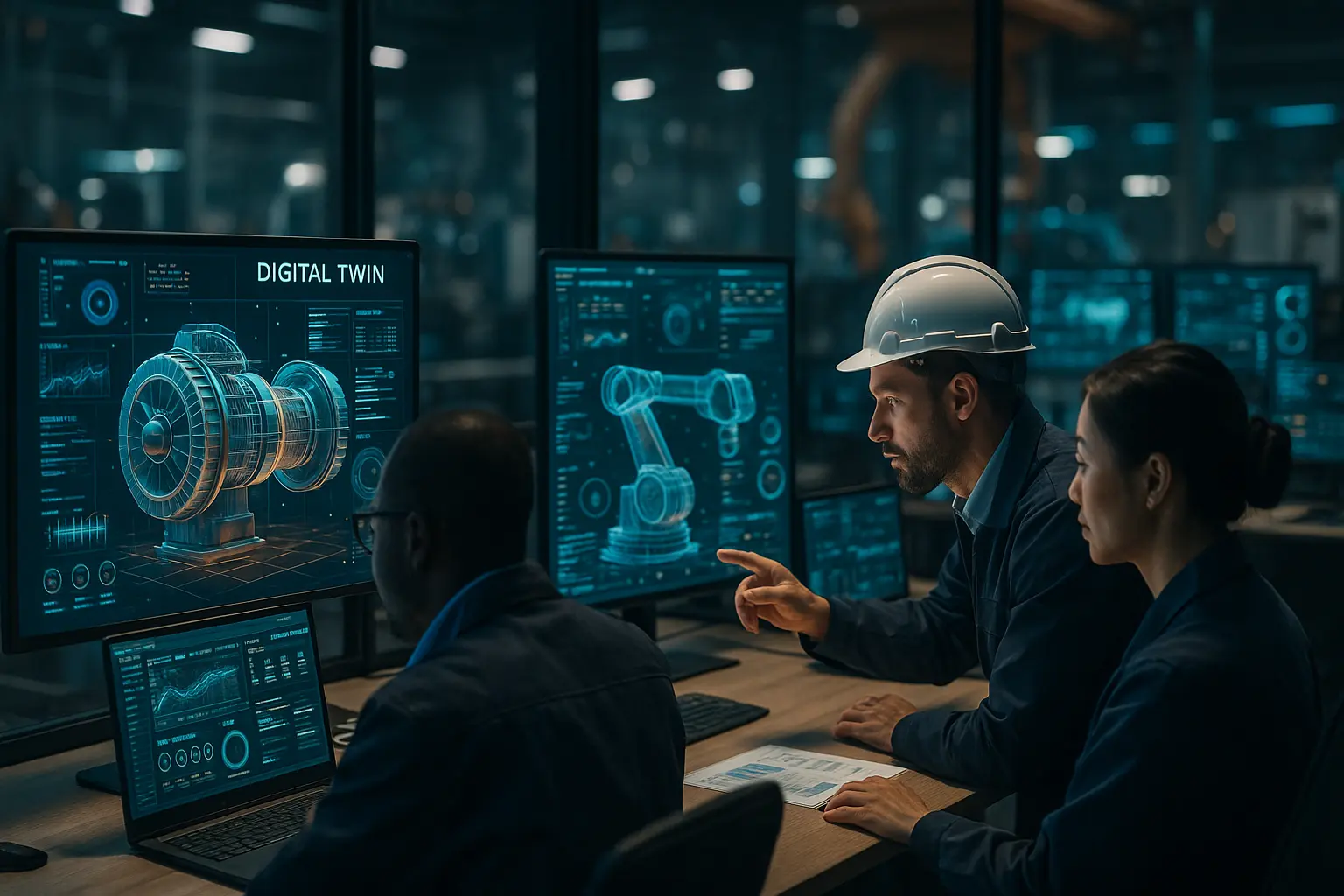
Understanding Digital Twins and Their Applications in Industry
As we continue to navigate the complexities of the technological era, it’s fascinating to observe how concepts once confined to science fiction are becoming tangible realities. Among these is the idea of digital twins—a groundbreaking innovation transforming industries by seamlessly integrating the physical and virtual worlds. Imagine a real-time simulation of a physical product or system that allows us to explore, understand, and optimize operations without ever touching the actual object. This is not just an idea; it’s an unfolding reality that’s poised to reshape how we approach manufacturing, maintenance, and innovation. Join us as we delve into the potential of digital twins and explore their expansive applications in today’s industries.
What Are Digital Twins?
The term “digital twin” may conjure images of futuristic doppelgängers, but in the realm of technology, it refers to something profoundly practical. digital twins are digital replicas of physical systems, products, or processes. They consist of detailed data models that mimic the behavior and characteristics of their real-world counterparts. This concept relies heavily on IoT (Internet of Things) technology, which collects data from sensors embedded in physical objects.
The data from these sensors are transmitted to the digital twin, allowing for a real-time simulation that mirrors the physical world. This intricate dance between the physical and virtual offers an unprecedented level of insight and control. By observing the digital twin, we can predict potential issues, test theories, and streamline processes—all without disrupting the physical product or system.
From aerospace to healthcare, the reach of digital twins is vast. In manufacturing, for instance, they can help streamline production and minimize downtime by preemptively identifying bottlenecks. Digital twins enable us to visualize every facet of a process, from the intricate workings of a product to entire systems. As we continue to harness their potential, the way we approach maintenance and operation is evolving dramatically.
The Role of Digital Twins in Manufacturing
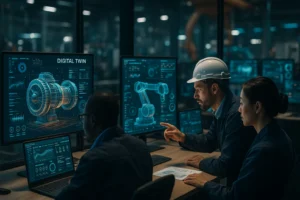
In the ever-evolving landscape of manufacturing, digital twins are proving to be a game-changer. What we once approached with trial and error can now be meticulously planned and executed with precision. By employing digital twins, manufacturers can simulate the entire production process, anticipating system inefficiencies long before they manifest physically.
Take, for example, a car manufacturer using digital twins to simulate the assembly line. Every mechanical movement, adjustment, and interaction within the system can be fine-tuned in the virtual world. This not only streamlines production but also extends the lifespan of machines by reducing wear and tear. With the help of real-time data, issues can be addressed proactively, reducing unplanned shutdowns and improving overall efficiency.
Digital twins are also revolutionizing product design. Engineers can test potential designs in the virtual realm, identifying flaws or enhancements before even a single component is manufactured. This technology allows for a level of innovation and creativity that was previously unimaginable.
Furthermore, the integration of IoT within manufacturing systems ensures that digital twins remain up-to-date, reflecting the current status of every physical component. This continuous feedback loop is invaluable for maintenance, providing insights that can extend the lifecycle of machinery and optimize performance.
Potential Benefits Across Various Industries
While it’s evident that digital twins have reshaped manufacturing, their influence extends far beyond the factory floor. Across various industries, digital twins are unlocking potential we had only dreamed of.
In the healthcare sector, digital twins are being used to create personalized patient models. These models allow doctors to tailor treatments based on individual characteristics, improving outcomes while minimizing risks. By simulating treatment effects in the virtual realm, healthcare providers can optimize personalized care plans.
The aerospace industry, too, benefits greatly from digital twin technology. By modeling physical systems like aircraft engines, engineers can predict wear and potential failures before they occur. This enhances safety and cuts maintenance costs, ensuring flights remain on schedule and in the air.
Moreover, urban planners employ digital twins to simulate city infrastructure. This aids in traffic management, environmental impact assessments, and resource allocation. By understanding how different elements interact, cities can become smarter, more efficient, and ultimately, more livable.
As we witness the integration of digital twins into a myriad of applications, it seems clear that they are not a temporary trend but a vital component of future technology strategies.
Overcoming Challenges and Looking Forward
Despite their potential, digital twins are not without challenges. A significant hurdle lies in the management and integration of expansive data streams. As industries embrace IoT devices, the volume of data generated is staggering. Ensuring accurate and timely data transfer between physical and virtual realms requires robust infrastructure and system design.
Cybersecurity is another critical concern. As digital twins become more prevalent, the risk of data breaches and unauthorized access increases. Safeguarding sensitive information is paramount, necessitating advanced security measures and constant vigilance.
Moreover, developing and deploying digital twins demands specialized expertise and resources. It requires a workforce skilled in technology and system integration, presenting a challenge for industries looking to adopt this innovative approach.
Looking ahead, the potential for growth and innovation in the digital twin space is limitless. As technology evolves, we anticipate even more sophisticated models that further bridge the gap between physical and virtual worlds. Digital twins hold the promise of revolutionizing industries, from product development to urban planning, heralding a new era of efficiency and innovation.
As we stand at the cusp of a technological renaissance, digital twins emerge as a beacon of innovation and potential. They represent more than just virtual simulations—they are a testament to human ingenuity, a tool that allows us to navigate the complexities of the modern world with unprecedented insight and precision.
By marrying technology with physical realities, digital twins create a landscape where informed decisions lead to optimal outcomes. From manufacturing to healthcare, their impact is profound and transformative.
As industries continue to explore the possibilities that digital twins offer, we find ourselves asking not “if” they will change the world, but “how” and “to what extent”. As our journey with digital twins unfolds, it promises to be one of discovery, innovation, and boundless potential. Together, let us embrace this revolution and harness its power for a brighter, more efficient future.
FAQ
What exactly is a digital twin?
A digital twin is a virtual model designed to accurately reflect a physical object. This digital counterpart simulates the real-world object in a digital environment, allowing for analysis, monitoring, and optimization of its real-life counterpart.
How do digital twins benefit industries?
Digital twins offer numerous advantages to industries, such as enhancing product design, improving operational efficiency, enabling predictive maintenance, and facilitating better decision-making through real-time data analytics.
Which industries are currently leveraging digital twins?
A wide range of industries are utilizing digital twins, including manufacturing, automotive, healthcare, aerospace, and urban planning, among others. Each sector uses the technology to improve processes, product lifecycle management, and customer experiences.
What technologies are integral to creating digital twins?
Creating digital twins involves several technologies, including the Internet of Things (IoT) for data collection, artificial intelligence for analysis, cloud computing for storage, and advanced visualization tools for interaction with the digital model.
Are there any challenges associated with implementing digital twins?
Yes, there are challenges, including ensuring data security, managing the complexity of integrating multiple systems, handling large volumes of data, and maintaining the accuracy of the digital twin model over time.








Post Comment