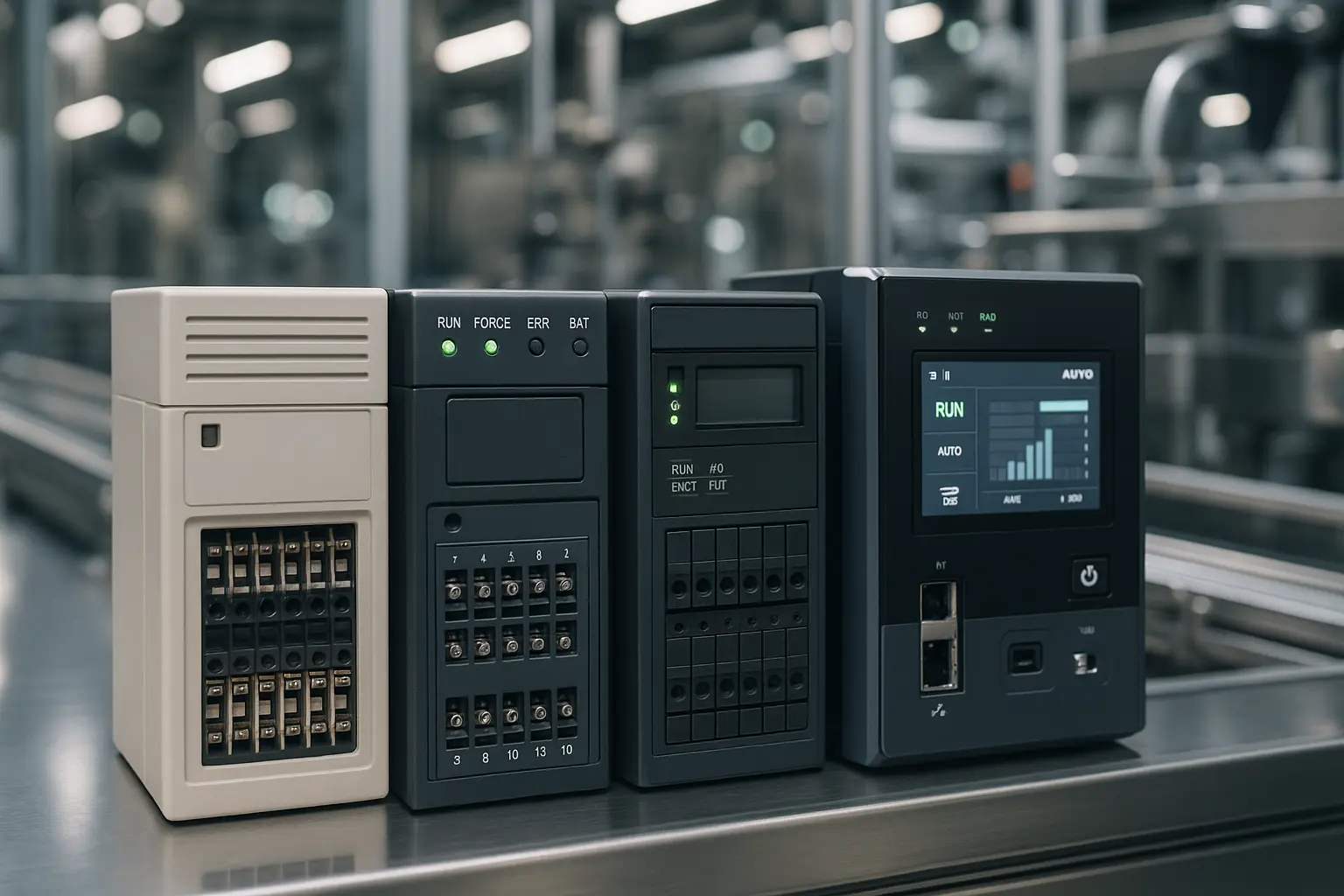
The Evolution of PLCs: From Basic Control to Smart Automation Systems
As we stand on the brink of a new industrial era, the role of Programmable Logic Controllers (PLCs) has never been more pivotal. With the ever-accelerating pace of technological advancement, it’s fascinating how these devices have evolved from simple relay substitutes to the backbone of modern industrial automation. Today, PLCs are not just about controlling manufacturing processes; they are the very heartbeat of smart automation systems.
The Genesis of PLCs
The story of PLCs began out of necessity during the late 1960s when the manufacturing industry was on the hunt for a flexible control system that could replace the bulky and inflexible relay control panels. The introduction of the first PLC marked a revolutionary step, providing a programmable solution that was both efficient and adaptable. Gone were the days of rewiring panels for each small change; with PLCs, programming became the new paradigm.
Why Are We Talking About PLCs?
In an age where automation is king, understanding the evolution of PLCs helps us appreciate the blend of technology and functionality that defines today’s industrial landscape. As industries push towards greater efficiency and reduced downtime, PLCs have become not only relevant but indispensable. Their capacity to interface with various devices and control systems makes them the unsung heroes in every production line.
In this article, let’s embark on a journey to explore the transformation of PLCs from basic control units to Smart Automation systems, highlighting their impact on modern manufacturing.
The Birth of PLCs: A Step Towards Modern Automation
The advent of PLCs emerged from a need in the automotive industry to streamline manufacturing processes. During the 1960s, factory floors were dominated by complex relay logic systems, which were cumbersome and time-consuming to manage. Engineers and technicians frequently faced the daunting task of controlling thousands of relays to implement even minor changes. This necessity inspired the innovation of PLCs, transforming how industrial logic controls operated.
The Early Days
The earliest PLC was designed to address the shortcomings of relay-based systems. These first-generation controllers were simplistic, yet revolutionary. With a focus on reliability and ease of programming, they quickly found their place in industrial settings. By allowing engineers to replace physical relays with programmable software, the groundwork was laid for a more dynamic control environment.
What Made PLCs a Game-changer?
- Flexibility: Unlike relay systems, where changes required physical alterations, PLCs allowed engineers to adjust processes by reprogramming software, drastically reducing time and labor.
- Diagnostic Capabilities: Early PLCs introduced diagnostic tools, enabling technicians to identify and address issues without extensive downtime.
- Modular Design: PLCs were built to be modular, allowing for easy expansion as industrial needs grew.
The Road to Standardization
As PLC technology matured, so did the necessity for standardization. The introduction of standardized programming languages, like ladder logic, facilitated a unified approach to programming. This evolution made it infinitely simpler for control systems to be tailored to diverse manufacturing needs.
Thanks to their adaptability and efficiency, PLCs quickly became the cornerstone for industries worldwide. As we moved into the 1980s, their usage proliferated beyond automotive to various sectors, including food processing, textiles, and even renewable energy, highlighting their versatility and indispensability.
The Transition from Basic Controllers to Advanced Systems
Fast forward to the dawn of the 21st century, and PLCs began to undergo a significant transformation. The integration of advanced technology turned these basic controllers into sophisticated Automation Systems capable of managing complex industrial processes.
Enhancements in PLC Technology
With the evolution of computer technology, PLCs started incorporating features that were previously unimaginable. We saw the introduction of high-speed processors, increased memory capacities, and better connectivity options. This development allowed PLCs to perform more complex tasks with greater efficiency and precision.
Advanced Programming Capabilities
- Structured Text and Function Block Diagrams: These programming languages provided greater flexibility, enabling complex industrial automation tasks to be accomplished with ease.
- Real-time Control: The incorporation of real-time processing allowed PLCs to deliver immediate responses to changes in the production environment, minimizing errors and enhancing productivity.
Connectivity and Integration
One of the most significant advancements has been the ability of PLCs to integrate with other automation systems and devices. Modern PLCs can communicate seamlessly with supervisory control and data acquisition (SCADA) systems, providing critical feedback that informs decision-making and enhances process control.
Impact on Manufacturing
With these advancements, PLCs have enabled industries to achieve higher levels of precision and efficiency. Enhanced data collection and analysis facilitate better decision-making, while real-time monitoring helps ensure smoother operations across manufacturing lines. The transition from basic controllers to advanced systems has thus paved the way for the era of smart manufacturing.
PLCs in the Era of Industry 4.0
As we step into 2025, PLCs are at the forefront of the Industry 4.0 revolution. The fourth industrial revolution is characterized by smart factories where cyber-physical systems communicate and cooperate seamlessly. The role of PLCs in this transition is crucial, as they form the backbone of intelligent automation systems.
The Smart Transformation
Today’s PLCs are embedded with an array of smart features that make them integral to Industry 4.0. They offer enhanced connectivity, high-speed processing, and robust data handling capabilities. The modern PLC is not just a controller but a strategic enabler of intelligent manufacturing.
Key Features Driving Industry 4.0
- Internet of Things (IoT) Integration: PLCs now connect effortlessly with IoT devices, enabling real-time data exchange and analysis. This connectivity provides valuable insights that drive process improvements and innovative automation.
- Machine Learning and AI: Incorporating AI and machine learning allows PLCs to adapt to changing conditions autonomously, optimizing operations and reducing errors.
- Predictive Maintenance: Leveraging advanced analytics, PLCs can predict equipment failures before they occur, minimizing downtime and enhancing productivity.
Transforming Production Lines
In the context of Industry 4.0, PLCs facilitate seamless integration within the manufacturing ecosystem. They enable interconnected systems that communicate in real-time, creating a dynamic production environment capable of self-optimization. The shift towards smart automation systems empowers industries to increase productivity while maintaining agility and adaptability.
As we continue to innovate, the role of PLCs in this revolution is set to expand. Their application in smart factories, combined with technological advancements, is likely to redefine the future of Industrial Automation.
The evolution of PLCs from basic controllers to key players in smart automation systems underscores their importance in shaping the future of industrial processes. As we navigate the complexities of Industry 4.0, PLCs continue to be at the heart of innovations that drive efficiency, flexibility, and productivity.
Looking Forward
The journey of PLCs is far from over. With continuous advancements in technology, future PLCs may feature enhanced machine learning capabilities, further integration with IoT, and smarter decision-making algorithms. Their role in facilitating sustainable manufacturing processes cannot be overstated.
Our Commitment
As the world pushes towards a sustainable future, our reliance on PLCs will only grow. They are the unsung heroes in the quest for efficient industrial automation, helping industries bridge the gap between traditional manufacturing and the smart factories of tomorrow. By embracing the possibilities PLCs offer, we ensure a future where innovation and technology work hand in hand to fuel progress.
In conclusion, the transformation of PLCs is a testament to the power of innovation in reshaping industries. As we look ahead, their potential continues to inspire, paving the way for a new era of automation and control.
FAQ
What were the primary functions of early programmable logic controllers (PLCs)?
Early PLCs were mainly designed to replace relay-based systems in manufacturing processes, focusing on tasks such as sequencing, timing, and basic logic operations. Their primary goal was to improve reliability and flexibility in industrial automation.
How did PLC technology progress in terms of hardware and software capabilities?
Over time, PLCs evolved from simple relay replacements to sophisticated automation systems. Hardware enhancements included faster processors, expanded memory, and increased input/output capacity. Software advancements provided more complex programming options, allowing for intricate control strategies and better integration with other systems.
In what ways have communication protocols impacted the development of PLCs?
The introduction of standardized communication protocols enabled PLCs to connect and communicate with other devices and systems effectively. This development allowed for enhanced data sharing, remote monitoring, and integration into larger automation networks, paving the way for more interconnected and intelligent systems.
How have PLCs adapted to the rise of smart manufacturing and Industry 4.0?
PLCs have embraced smart manufacturing by incorporating advanced features such as real-time data analytics, cloud connectivity, and machine learning capabilities. These enhancements facilitate increased automation, predictive maintenance, and improved decision-making processes, aligning with the goals of Industry 4.0.
What are some emerging trends in the future development of PLCs?
Future trends in PLC development include the continued integration of artificial intelligence, increased use of wireless communication, and enhanced cybersecurity measures. These advancements aim to create more adaptive, secure, and efficient automation solutions, further driving the evolution of smart manufacturing systems.








Post Comment